PRODUCTS & RD
MG-O-1008
nAMD / DME / RVO: Disease Overview, Global Patient Population, and Market Size
nAMD (Neovascular Age-Related Macular Degeneration)
Abnormal choroidal neovascularization causes leakage, hemorrhage, and rapid central vision loss. It affects approximately 20 million people worldwide. The global AMD market was valued at US$11.6 billion in 2025 and is projected to reach US$22.7 billion by 2033.DME (Diabetic Macular Edema)
Diabetes-induced retinal vascular leakage causes macular edema and vision loss. It affects approximately 19–21 million people globally, increasing to 29 million by 2045. The market is expected to grow from US$4.2 billion in 2025 to US$4.4 billion by 2030.RVO (Retinal Vein Occlusion)
Retinal vein blockage causes ischemia, hemorrhage, and macular edema. It affects approximately 28 million people worldwide. The market is projected to grow from US$3.2 billion in 2026 to US$4.2 billion by 2030.All three conditions rely heavily on repeated anti-VEGF injections, highlighting the need for long-acting intraocular therapies.

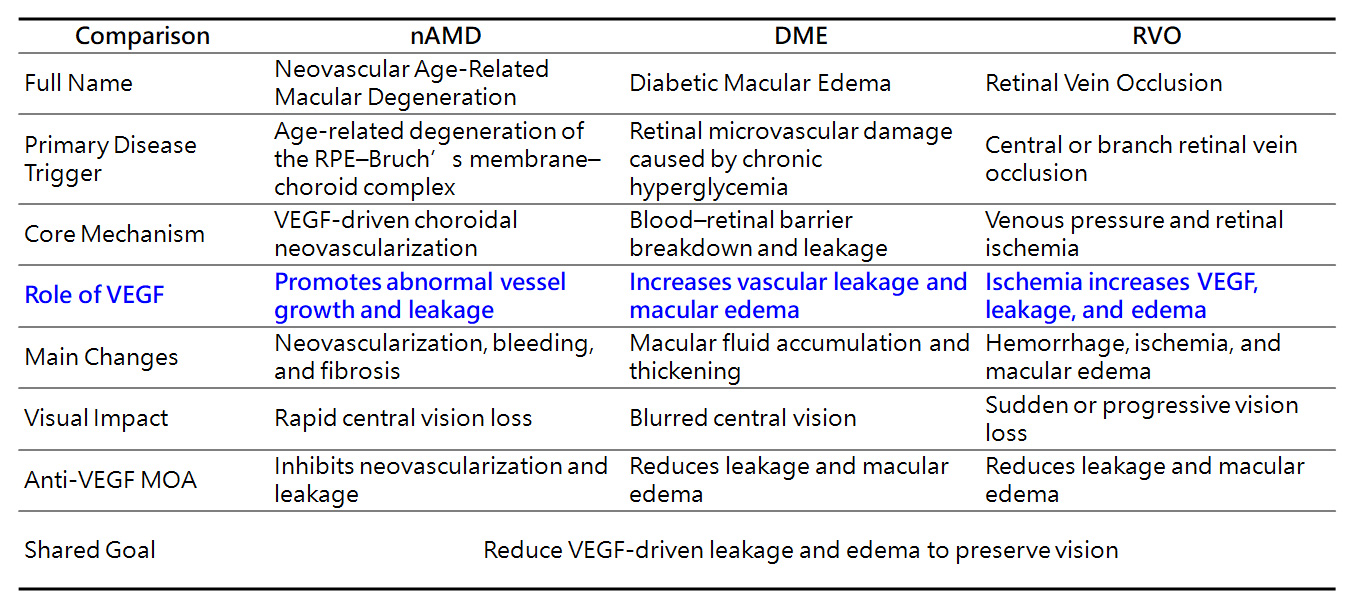
MOA and Pathological Features of nAMD, DME, and RVO
Biodegradable PLGA Implants
PLGA (poly(lactic-co-glycolic acid))–based ocular implants are biodegradable drug-delivery systems developed for treating posterior-segment eye diseases such as retinal and macular disorders. PLGA is a well-established medical polymer that gradually degrades into lactic acid and glycolic acid, which are naturally metabolized by the body, eliminating the need for implant removal and providing a strong safety profile.These implants are extremely small and are inserted into the vitreous humor using a specially designed injector. Once implanted, they release medication in a controlled and sustained manner over weeks to months. Compared with conventional intravitreal injections, PLGA implants reduce dosing frequency, improve treatment convenience, and lower the risk of injection-related discomfort and infection.
A major advantage of PLGA-based ocular implants is their ability to deliver drugs directly to the target tissues within the eye, enhancing therapeutic effectiveness while minimizing systemic exposure and side effects. By adjusting polymer composition and implant design, the release rate and treatment duration can be tailored to different disease needs.
Overall, PLGA-based ocular implants represent a proven and versatile platform for long-acting ophthalmic therapies, combining biodegradability, sustained drug release, and extensive clinical experience to improve patient outcomes and quality of life.
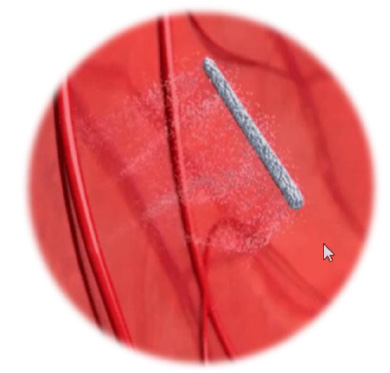
nAMD / DME / RVO MG-O-1008 Intravitreal Implant
MG-O-1008 is a biodegradable, long-acting intravitreal implant developed under the 505(b)(2) pathway. It uses a clinically validated small-molecule VEGF inhibitor to slow disease progression while reducing dosing frequency.Key features include:
- Validated MOA and safety profile
- Ultra-thin 0.3 mm implant
- Specialized injector
- Complex, high-barrier GMP manufacturing
- Difficult-to-replicate PLGA formulation
MG-O-1008 is currently under international patent application.